
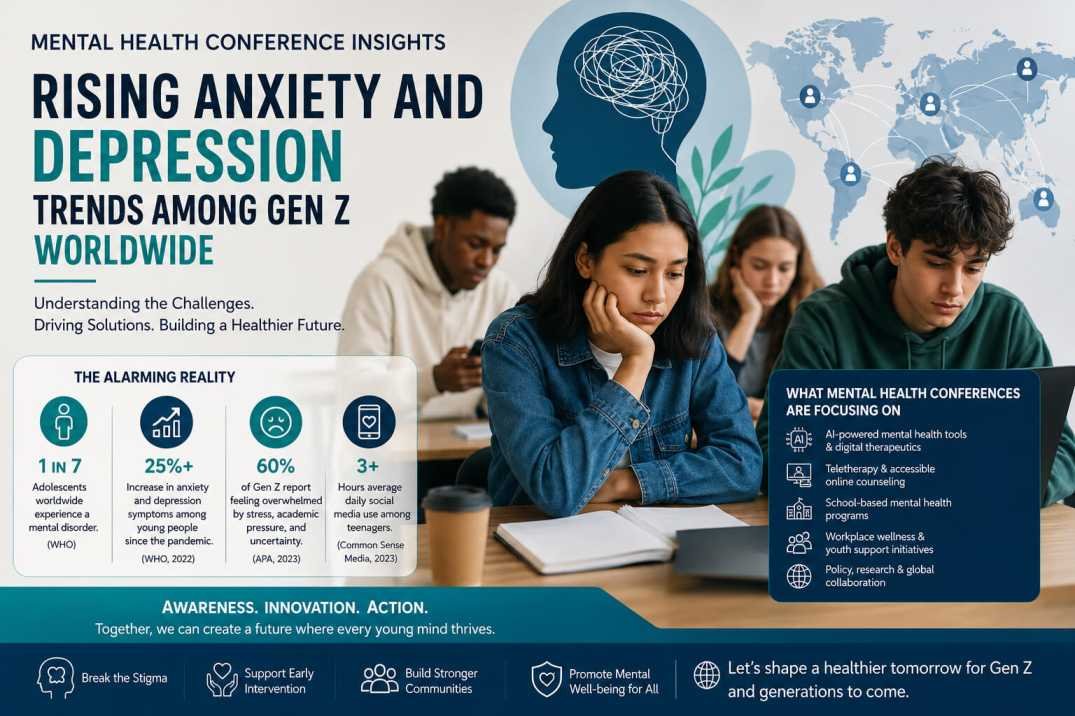
Mental health conference discussions in 2026 are increasingly centered around one urgent global issue: the rising rates of anxiety, depression, burnout, loneliness, and emotional distress among Generation Z. Born roughly between 1997 and 2012, Gen Z has become the most digitally connected generation in history, yet multiple global studies show they are also experiencing some of the highest levels of mental health challenges ever recorded.
From academic pressure and economic uncertainty to social media exposure, climate anxiety, digital addiction, and post-pandemic psychological stress, the factors contributing to declining mental wellness among Gen Z are complex and deeply interconnected. According to the World Health Organization (WHO), anxiety and depressive disorders increased significantly worldwide following the COVID-19 pandemic, with young people among the most affected populations. Meanwhile, reports from the American Psychological Association (APA), UNICEF, CDC, and Deloitte continue to reveal alarming trends in emotional distress among students, young professionals, and adolescents.
As these concerns intensify, mental health conferences worldwide are becoming essential platforms for researchers, clinicians, educators, policymakers, and healthcare innovators seeking data-driven solutions and evidence-based interventions. These conferences are not only identifying the root causes of Gen Z’s mental health crisis but are also shaping the future of prevention, treatment, digital psychiatry, and global mental wellness strategies.
Understanding the Global Rise of Anxiety and Depression Among Gen Z
Mental health challenges among Gen Z are no longer isolated public health concerns—they are now global societal and economic issues. Studies from leading institutions indicate that younger populations are reporting significantly higher rates of:
- Generalized anxiety disorder (GAD)
- Major depressive disorder
- Panic attacks
- Social anxiety
- Sleep disorders
- Emotional burnout
- Loneliness and isolation
- Self-harm and suicidal ideation
According to the World Health Organization, approximately one in seven adolescents globally experiences a mental disorder, accounting for around 13% of the global burden of disease among young people. Depression, anxiety, and behavioral disorders are among the leading causes of illness and disability in adolescents worldwide.
Similarly, the U.S. Centers for Disease Control and Prevention (CDC) reported alarming increases in persistent sadness and hopelessness among high school students in recent years, especially among female students and marginalized communities. Mental health conferences are increasingly using these statistics to drive conversations around prevention, accessibility, and early intervention.
Why Gen Z Is Facing a Mental Health Crisis
1. Social Media and Digital Overload
One of the most discussed topics at every major mental health conference in 2026 is the psychological impact of social media. Platforms like Instagram, TikTok, Snapchat, and YouTube have transformed communication and self-expression, but they have also intensified:
- Social comparison
- Cyberbullying
- Validation dependency
- Fear of missing out (FOMO)
- Online harassment
- Unrealistic beauty standards
- Digital addiction
Research published in various psychiatric journals suggests excessive screen time and compulsive social media use may contribute to heightened anxiety and depressive symptoms, especially among teenagers and young adults.
Mental health conferences are now exploring how digital literacy, healthier online habits, and AI-powered moderation tools can reduce psychological harm among younger populations.
2. Academic Pressure and Career Uncertainty
Another major factor contributing to Gen Z anxiety is intense academic and career pressure. Students worldwide face:
- Competitive educational environments
- Student loan burdens
- Uncertain job markets
- Rising living costs
- Economic instability
- Fear of automation and AI displacement
According to Deloitte’s Gen Z and Millennial Survey, financial insecurity and work-related stress remain among the top concerns affecting young adults globally. Mental health conferences increasingly include sessions on workplace wellness, educational reform, and resilience-building strategies aimed at younger generations.
3. Post-Pandemic Emotional Impact
The COVID-19 pandemic significantly disrupted the developmental and social experiences of Gen Z. Lockdowns, school closures, isolation, and uncertainty contributed to:
- Increased loneliness
- Social withdrawal
- Anxiety disorders
- Depression
- Reduced emotional resilience
Young people who missed key social milestones during formative years continue to experience long-term psychological effects. Experts at global mental health conferences now describe the pandemic as a major accelerator of existing mental health vulnerabilities among youth populations.
4. Climate Anxiety and Global Uncertainty
Climate change has emerged as a surprisingly significant mental health concern among Gen Z. Many young people report feelings of helplessness, fear, and eco-anxiety regarding:
- Environmental disasters
- Rising temperatures
- Resource scarcity
- Political instability
- Future uncertainty
Mental health conferences increasingly feature discussions around “climate anxiety” and psychological resilience in response to global crises.
Global Mental Health Conference Trends Focused on Gen Z
As anxiety and depression rates rise, mental health conferences worldwide are rapidly adapting their agendas to address the needs of younger generations.
AI and Digital Mental Healthcare
One of the biggest innovations highlighted at mental health conferences is the use of artificial intelligence in mental healthcare delivery. AI-driven tools are now being used for:
- Early symptom detection
- Suicide risk prediction
- Personalized therapy recommendations
- Mood tracking
- Virtual counseling support
- Chatbot-based interventions
Digital mental health platforms are expanding access to care for Gen Z populations who are already comfortable with technology-based communication.
Teletherapy and Virtual Counseling
Teletherapy adoption has grown dramatically since the pandemic. Many Gen Z patients prefer virtual care due to:
- Convenience
- Accessibility
- Reduced stigma
- Flexible scheduling
- Lower costs
Mental health conferences in 2026 frequently explore how telepsychiatry and hybrid therapy models can bridge treatment gaps, especially in underserved areas.
School-Based Mental Health Programs
Educational institutions are increasingly implementing:
- On-campus counselors
- Emotional wellness programs
- Peer support initiatives
- Mindfulness training
- Anti-bullying interventions
Mental health conferences now emphasize collaboration between educators, psychologists, and policymakers to strengthen early prevention systems.
The Economic Impact of Gen Z Mental Health Challenges
Mental illness among younger generations is not only a healthcare issue—it also has major economic implications.
The World Economic Forum and WHO estimate that mental health conditions cost the global economy trillions of dollars through:
- Reduced productivity
- Absenteeism
- Healthcare expenses
- Academic disruption
- Unemployment
- Workplace burnout
Employers are increasingly recognizing that Gen Z employees prioritize mental wellness, flexibility, and psychological safety when choosing workplaces.
As a result, workplace mental health has become one of the fastest-growing themes at mental health conferences worldwide.
Rising Demand for Youth-Focused Therapy and Counseling
Healthcare systems globally are witnessing unprecedented demand for:
- Cognitive behavioral therapy (CBT)
- Trauma-informed care
- Adolescent psychiatry
- Online counseling
- Group therapy
- Mindfulness and meditation programs
Unfortunately, many countries continue to face severe shortages of mental health professionals.
Mental health conferences are now addressing strategies to scale care delivery through:
- Digital therapeutics
- Community health workers
- AI-assisted interventions
- Preventive mental healthcare models
How Mental Health Conferences Are Driving Solutions
Knowledge Sharing and Research Collaboration
Mental health conferences provide opportunities for global experts to share:
- Clinical research
- Public health data
- Treatment innovations
- Prevention frameworks
- Youth engagement strategies
These events accelerate collaboration between universities, healthcare systems, NGOs, and governments.
Advancing Public Policy
Policy discussions at mental health conferences increasingly focus on:
- Insurance accessibility
- Mental health funding
- School mental health legislation
- Suicide prevention strategies
- Youth wellness initiatives
Governments are under growing pressure to treat mental health as a public health priority rather than a secondary issue.
Promoting Early Intervention
Research consistently shows early intervention improves long-term outcomes. Conferences now emphasize:
- Mental health screening
- Youth counseling access
- Preventive education
- Community outreach
Early support systems are viewed as critical to reducing severe psychiatric disorders later in life.
Why Mental Health Conferences Matter More Than Ever in 2026
The global mental health landscape is evolving rapidly. Professionals attending mental health conferences gain direct exposure to:
- Emerging therapy models
- Neuroscience research
- AI-driven mental healthcare tools
- Youth-focused intervention strategies
- Teletherapy best practices
- Policy innovation
For psychologists, psychiatrists, counselors, educators, researchers, and public health leaders, these conferences provide valuable opportunities to remain informed in an increasingly complex healthcare environment.
The Role of Technology in Supporting Gen Z Mental Wellness
Technology is both a contributor to and potential solution for Gen Z mental health challenges.
Positive Innovations Include:
- Mental wellness apps
- Guided meditation platforms
- AI therapy assistants
- Online support communities
- Virtual mental health coaching
However, experts at mental health conferences also caution against:
- Excessive screen exposure
- Algorithm-driven emotional manipulation
- Digital dependency
- Online misinformation
Balancing innovation with ethical safeguards remains a central topic in modern mental healthcare discussions.
Mental Health Awareness Is Increasing Worldwide
Despite the challenges, one positive trend is growing mental health awareness among younger generations. Gen Z is generally more open to discussing:
- Anxiety
- Depression
- Therapy
- Emotional vulnerability
- Self-care
- Psychological wellness
This cultural shift is helping reduce stigma and encouraging more people to seek support earlier.
Mental health conferences are playing a major role in normalizing these conversations globally.
Future Outlook for Gen Z Mental Health
Experts predict the future of youth mental healthcare will involve:
- Personalized treatment approaches
- AI-supported diagnostics
- Preventive mental health systems
- School-integrated counseling
- Expanded teletherapy access
- Community-based wellness models
At the same time, governments and healthcare organizations must continue investing in mental health infrastructure, workforce development, and accessible care systems.
Without coordinated global action, anxiety and depression trends among Gen Z may continue to rise over the next decade.
Final Thoughts
The rising anxiety and depression trends among Gen Z represent one of the most urgent public health challenges of the modern era. Social media pressure, economic uncertainty, climate anxiety, academic stress, and post-pandemic emotional disruption have collectively created a complex mental health environment for younger generations worldwide.
As healthcare systems adapt to these realities, mental health conferences are becoming increasingly important platforms for identifying solutions, sharing research, advancing policy, and promoting innovation in behavioral healthcare.
From AI-driven therapy tools and telepsychiatry to school-based interventions and workplace wellness strategies, the future of mental healthcare will depend heavily on collaboration, technology, early intervention, and evidence-based care models.
Professionals seeking deeper insights into youth mental wellness, emerging treatment innovations, and global mental healthcare trends should actively participate in leading mental health conferences shaping the future of behavioral healthcare in 2026 and beyond.